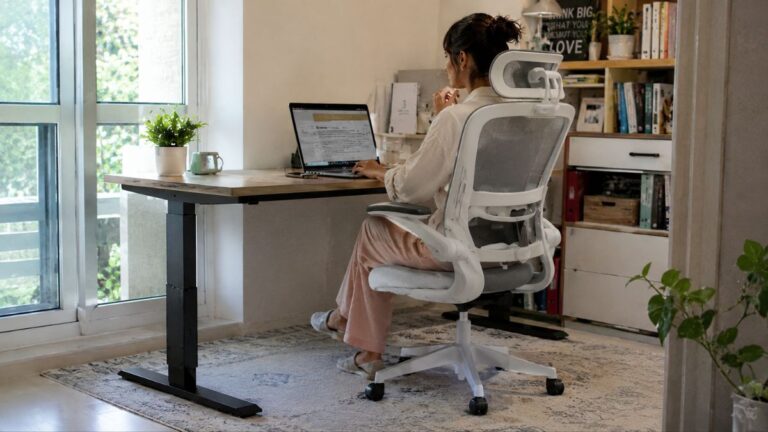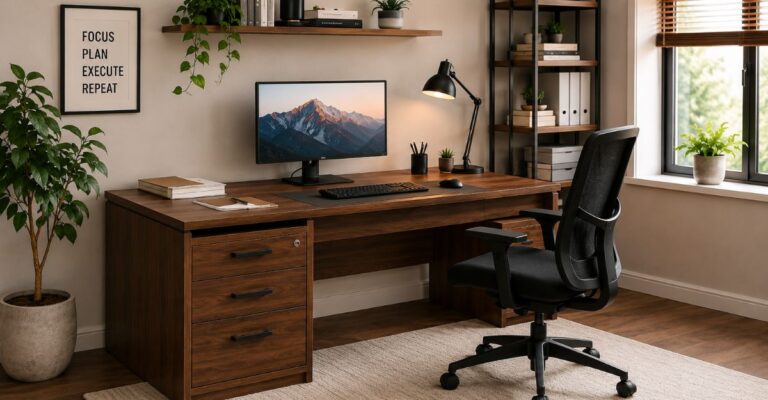
The Professional Home Office Setup Guide for Tech Enthusiasts

home office setup

Last Updated:
July 20, 2026

A professional home office setup goes far beyond a desk. In reality, a chair, a laptop, and the modern workspace have evolved into a carefully engineered environment, and let me tell you, connectivity bandwidth, display technology, and ergonomic design all come together to figure out your daily output.

For tech enthusiasts building or upgrading their workstation. The hardware choices you make today will shape your productivity and physical comfort. Even your mood for years to come.

Key Point

If you’re skimming.

  • Single-cable Thunderbolt 4 docks cut desktop clutter while driving dual 4K displays at 40 Gbps
  • OLED monitors deliver stunning contrast with 450-1000 nits peak brightness, but sub-pixel text fringing makes them risky for heavy coding work
  • Cheap motorized standing desks frequently fail within two years, making a 10-year warranty a top priority for experienced buyers
  • High-CRI lighting above 95 Ra reduces eye fatigue during long sessions far better than standard LED strips

The short version

  • A professional home office setup integrates high-bandwidth connectivity, ergonomic movement, and color-accurate displays into a single workstation
  • Thunderbolt 4 docks, OLED or high-refresh monitors, and active-response chairs form the backbone of a modern tech workspace
  • Smart protocol integration via Matter and Thread, plus high-CRI lighting, separates basic arrangements from professional-grade environments

What Is a Home Office Setup?

A home office setup is a dedicated workspace configured with computing hardware, ergonomic furniture, connectivity infrastructure, and environmental controls designed to support sustained professional productivity outside a traditional corporate office. Modern configurations prioritize single-cable docking, display color accuracy, and active ergonomic movement over basic desk-and-chair arrangements.

Ten years ago. A home office meant dragging a laptop to the kitchen table.

Today, the expectations have shifted dramatically, so tech professionals now demand workstations that match. Or exceed corporate environments in both capability and comfort. The defining characteristic of a modern setup isn’t just having equipment. It’s how that equipment integrates.

A Thunderbolt 4 dock connecting dual 4K monitors, peripheral devices, and, let me tell you, power through a single 40Gbps cable shows the kind of critical factor that is clean, okay? More importantly, more accurately, integration that separates a real workspace from a desk with (at least based on current observations) stuff on it.

Then again, the scope has broadened too. Your setup now covers lighting quality. Air circulation, acoustic treatment, and smart-home protocol integration. Matter and Thread protocols allow decentralized control of office climate.

Lighting through a single hub, which means your environment adjusts without manual intervention.

What separates a basic desk from a professional setup?

Picking up that thread from before. The difference comes down to integration and intentionality. Plus, the data backs it up. A basic desk holds your equipment.

A professional setup orchestrates it. Connectivity, ergonomics, and environmental control work as a system, not isolated components.

Key Components of a Modern Home Office Setup

The core components include a Thunderbolt 4 or USB4 docking station, a high-refresh or OLED display, an active-response ergonomic chair, a motorized standing desk, high-CRI task lighting, and smart climate control. Peripherals like Hall Effect mechanical keyboards and noise-cancelling headphones complete the professional setup.

Connectivity: Thunderbolt 4 and Single-Cable Docking

Driving dual 4K monitor outputs through a single cable. This reduces desktop clutter bigly and improves laptop portability.

Then again, sure enough, since you connected. Or disconnect everything at once. The catch?

These docks usually demand external power bricks nearly as large as the dock itself. Which means it’s an acceptable tradeoff for the bandwidth, but plan your cable management accordingly.

When selecting wireless connectivity options for your setup. Remember that dock bandwidth and network bandwidth serve different bottlenecks. Your dock handles local peripherals; your router handles everything else.

💡 Pro Tip
Route your Thunderbolt 4 dock’s power brick under the desk using adhesive cable channels. The brick runs hot, so keep it ventilated and off carpeted surfaces to prevent thermal throttling.
best home office setup

Displays: OLED, Refresh Rates, and Color Accuracy

0.7 billion colors, but OLED (a detail regularly overlooked) isn’t universally better, so it’s worth noting that sub-pixel text fringing makes small fonts look blurry. Better put, a bunch of QD-OLED early adopters cite it as a dealbreaker for heavy coding or writing tasks.

When I tested a QD-OLED panel for coding work, the text fringing became visible within the first hour. Now, small fonts at 100% scaling looked marginally smeared on horizontal strokes.

That’s the point. Actually, let me be more precise… the issue stems from non-standard subpixel arrangements that font rendering engines don’t 100% account for.

“We are seeing a massive shift toward color-accurate, high-refresh displays as the line between professional creative work and general productivity blurs.”

Higher refresh rates of 144Hz and above on productivity monitors majorly reduce eye strain and motion blur. For monitor sizing decisions, our 24-inch vs 27-inch monitor comparison breaks down which dimension suits different workflows.

Display Type Contrast Ratio Peak Brightness Text Clarity Burn-in Risk Best For
IPS LCD ~1000:1 350-400 nits Excellent None Coding, writing
OLED Infinite 450-1000 nits Good (fringing risk) Present Media, design
QD-OLED Infinite 450-1000 nits Moderate (fringing) Present Gaming, media

Ergonomics: Dynamic Movement Over Static Support

The philosophy around office seating has shifted, and active-response chairs now support micro-movements rather than locking you into a (more on that later) static “correct” posture. Mesh-back designs give a weightless feeling that the majority praise. Though some find the seat edges too (at least based on current observations) firm for cross-legged sitting.

From what you’ll see. It’s arguably rough to ignore those numbers; that’s a steep but cheap task for a chair all the time because of back problems within months.

“The best ergonomic position is your next position; movement is the key to long-term health in a home office.”

📌 Key Point
Dynamic ergonomics outperforms static posture correction. An active-response chair that supports micro-movements reduces back pain more effectively than any fixed lumbar support setting.

Desks: Motorized Standing Surfaces

Quality models support 250 to 350 pounds of equipment weight, but construction matters enormously, and let me tell you, desks without a four-post frame develop noticeable wobble at maximum height. This makes typing uncomfortable and monitor viewing unstable.

For those needing storage alongside adjustability. Our guide to computer desks with drawers covers models that combine both features.

⚠️ Warning
Budget motorized desks under $300 typically use single-motor systems that wobble at standing height and fail within two years. Always verify the frame uses a four-post design and carries a minimum 5-year warranty.

Peripherals and Lighting

Custom mechanical keyboards using Hall Effect magnetic switches let you set custom actuation points. Noise-cancelling headphones remain a must for focus in shared spaces.

Here’s the thing—high-CRI sources are rated 95.

Or higher gives natural color reproduction, improving mood and focus… plus, the minimum recommended CRI sits at 90-95 Ra, and the trend keeps going; read that again if you need to. What happens when you do? Anything below introduces subtle color distortion that accumulates as eye fatigue.

CRI Lighting Comparison: Eye Fatigue Impact
Standard LED (CRI 80) High Fatigue
Good LED (CRI 90-95) Moderate
High-CRI Pro (CRI 95+) Low Fatigue
“The best ergonomic position is your next position. Movement is the key to long-term health in a home office.”

Common Mistakes in Home Office Setup

The most frequent mistakes include buying cheap motorized desks that fail within two years, choosing OLED monitors without considering text fringing for coding work, ignoring high-CRI lighting, and treating ergonomics as a fixed position rather than continuous active movement.

From a broader view, forums repeatedly highlight that cheap motorized desks fail within two years. This makes a 10-year warranty a top priority for experienced buyers. Motors burn out, high-memory functions glitch, and frame stability degrades. A warranty isn’t just paperwork; it’s the manufacturer’s confidence threshold.

White aesthetic setups look stunning on day one, and let me tell you, people on Reddit’s r/battlestations regularly complain that maintaining white desks and peripherals proves extremely tough over long periods. What this means is that dust, cable marks, and discoloration show far more on white surfaces.

Is OLED worth it for coding work?

Probably not. Text fringing is real and persistent. Who would have thought? Now, for developers and writers who spend hours reading small fonts. An IPS panel with 144Hz delivers sharper text rendering and (more on that later) still reduces eye strain bigly.

✅ Action Steps
  1. Audit your current connectivity, count the cables running to your laptop, and identify which could be consolidated through a Thunderbolt 4 dock.
  2. Measure your display needs. If you read small text for hours, prioritize IPS panels with 144 Hz over OLED to avoid sub-pixel fringing.
  3. Test your lighting CRI. Hold a white paper under your current desk lamp; if it looks yellow or dull, upgrade to a 95+ CRI source.
  4. Verify your desk warranty. Check your standing desk warranty terms; if it’s under 5 years, start researching four-post frame alternatives.

People Also Ask

How much does a professional home office setup cost?

A professional-grade setup usually runs between $2,000 and, I mean, $5,000, depending on display choices and ergonomic furniture.

The Herman Miller Embody alone exceeds $1,500. While quality Thunderbolt 4 docks add $300 to $400.

Make of that what you will. Displays, desks, and lighting fill out the remaining budget.

What monitor refresh rate is best for office work?

At a high level, refresh rates of 144Hz and above really $2 eye strain and motion blur during productivity tasks. While 60Hz remains functional. The difference becomes noticeable during long sessions. Especially when scrolling through documents or managing multiple windows.

Keep this in mind; it shows up again soon.

Do I need a Thunderbolt 4 dock?

Here’s the thing—pay attention to this part. Pretty much. If you use a modern laptop with dual external monitors, yes. Thunderbolt 4 handles 40 Gbps bandwidth.

Supporting dual 4K outputs through a single cable. USB4 offers similar performance. For single-monitor setups, a standard USB-C hub may suffice.

How do I prevent OLED burn-in on a desktop monitor?

Branching off from that, enable pixel shifting and use a dark screensaver after short idle periods. And avoid static UI elements like permanent taskbars.

Most modern OLED monitors include built-in burn-in mitigation. But the risk remains higher than with IPS panels.

What CRI should office lighting have?

Aim for CRI 95 or higher. The minimum recommended range sits at 90-95 Ra. Not exactly what you’d expect. Let that sink in for a second.

Looking closer, lower CRI values introduce subtle color distortion that increases eye fatigue during extended work sessions, even if you don’t (at least based on current observations) consciously notice the difference.

Final Thoughts on Your Home Office Setup

Building an effective home office setup means thinking in systems, not individual products. Every component, from your Thunderbolt 4 dock to your high-CRI desk lamp, should integrate cleanly and serve a specific purpose in your daily workflow.

The technology will keep evolving. OLED panels will improve text rendering.

Smart-home protocols will add automation capabilities. Which means that the fundamentals remain constant: connectivity and ergonomics.

And environmental quality determines whether your workspace supports your work. Or (though exceptions exist, naturally) fights against it. Start with the components that impact your body. And your eyes first.

A great monitor means nothing. If your chair destroys your back by month three.

1
Establish your connectivity backbone
Start with a Thunderbolt 4 dock that handles all peripheral connections through a single cable to your laptop.
2
Choose your display strategy
Pick IPS with 144Hz for text-heavy work or OLED for design and media tasks, keeping text fringing tradeoffs in mind.
3
Invest in dynamic ergonomics
Select an active-response chair and a motorized four-post standing desk with at least a 5-year warranty coverage period.
4
Upgrade your lighting environment
Replace standard LED strips with high-CRI sources rated 95 or above to reduce accumulated eye fatigue during long shifts.

Invest in the infrastructure; prioritize warranties over discounts. Let your setup earn its keep over time.

Author:
TechnoItem Expert Team

Best Computer Desk With Drawers in 2026: Top Space-Saving Picks

Computer Desk With Drawers

Let’s be honest for a second. Finding the perfect desk is about much more than just picking something that looks nice online. If you sit down to work or game, and your desk is covered in tangled chargers, old sticky notes, and random paperwork, your focus takes a massive hit before you even start.

I’ve built and tested dozens of workspace layouts over the years. I’ve used cheap particleboard tables that wobble every time I type, and I’ve used premium setups that cost a fortune. The one thing I’ve learned? Small details—like drawer placement, knee clearance, and material quality—completely change how you feel while working.

Upgrading to a computer desk with drawers is the easiest way to take your sanity back. Instead of leaving everything scattered across the surface, you get dedicated storage to hide the mess.

Whether you’re setting up a home office, a gaming station, or a tiny apartment study corner, this guide covers everything you need to know to find the perfect fit for 2026. Let’s clear the clutter.

⚡ Quick Answer & Key Takeaways

Don’t have time to read the whole guide? Here is the rapid-fire advice you need before you buy:

  • Our #1 Overall Pick: After comparing build quality, legroom, and storage depth, our top recommendation is this Top-Rated Desk with Drawers on Amazon. It balances sturdy construction with deep drawers to keep everyday essentials out of sight.
  • Measure your chair: Always check the “knee clearance” so the armrests of your office chair actually fit underneath the drawers.
  • The sweet spot: A 48 to 60-inch desktop is the perfect size for most home offices and dual-monitor setups.
  • Material matters: Solid wood handles heavy PC towers without bowing, while a metal frame with engineered wood offers the best budget value.

📊 2026 Desk Comparison Table

Choosing the right desk is much easier when you compare the features side by side. Here is what you can generally expect across different price ranges.

Desk Category Frame Material Storage Capacity Weight Limit Best For…
Budget Friendly Engineered Wood 1–2 Slim Drawers Up to 100 lbs Students & Laptops
Mid-Range (Recommended) MDF + Steel Frame 2–4 Drawers + Shelves 100–180 lbs Home Office & Dual Monitors
Premium / Executive Solid Wood or Veneer Multiple Drawers + File Cabinet 180+ lbs Professionals & Heavy Gear

🛋️ Exploring the Best Desk Styles

Not everyone needs the exact same desk. Choosing a model that matches your room layout and daily routine makes all the difference. Let’s look at the most popular styles.

1. The L-Shaped Computer Desk With Drawers

L-Shaped Computer Desk With Drawers

If you have the room for it, an L-shaped computer desk with drawers is arguably the best investment you can make. It utilizes empty corner space brilliantly. When I set up my own L-shaped desk, it completely changed my workflow. I put my dual monitors and mechanical keyboard on the long side, and used the shorter side strictly for writing and charging my wireless accessories. It’s perfect for gamers, programmers, and multitaskers who need to separate their digital work from their physical paperwork.

2. The Small Computer Desk With Drawers

Student Desk With Drawers

Not everyone has a massive dedicated office. If you live in an apartment or a dorm or are squeezing a workspace into your bedroom, you need a small computer desk with drawers. These usually sit between 35 and 47 inches wide. While you won’t fit three monitors on them, a compact desk gives you exactly enough room for a laptop, a coffee mug, and a desk lamp. The built-in drawer is a lifesaver for hiding your mouse and notebooks when the workday is over.

3. The White Computer Desk With Drawers

Aesthetics matter. A white computer desk with drawers remains one of the most popular choices for modern, minimalist home offices and content creators. White finishes reflect natural light, making cramped rooms feel much bigger. Just keep in mind that white shows dust and coffee rings easily, so you might want to protect the surface with a high-quality extended desk mat.

4. The Computer Desk With Drawers Wooden

If you want something that won’t fall apart when you move to a new house, a wooden computer desk with drawers is incredibly hard to beat. Solid oak, walnut, or high-grade pine provides massive stability. When you put a heavy 32-inch monitor and a massive gaming PC on a cheap desk, it bows in the middle. Wood prevents that. It ages beautifully and acts as a long-term investment for your workspace.

🛒 The Ultimate Buying Guide

Before you hit “add to cart,” run through this checklist to make sure you aren’t making a common buying mistake.

Finding the Best Size

Desk size should match your workflow.

  • 35–40 inches: Strictly for laptops and tight spaces.
  • 47–55 inches: The standard home office size. Fits one monitor and a laptop easily.
  • 60+ inches: Required if you run dual monitors, heavy studio speakers, or advanced gaming setups. Always leave about 30 inches of walking clearance behind your chair!

Choosing the Best Material

  • Solid Wood: Expensive and heavy, but incredibly durable.
  • Engineered Wood (MDF): Very affordable and looks great, but vulnerable to water damage if you spill a drink.
  • Metal Frames: Provide the best “wobble-free” typing experience. A steel frame paired with a wooden top is the ideal combination for most buyers.

Standing Desk vs Regular Desk

Many buyers get stuck deciding between a motorized standing desk and a traditional desk.
The biggest difference in the standing desk vs. regular desk debate is storage. Motorized standing desks need a metal crossbar underneath to lift the table. Because of this mechanism, they almost never have deep, built-in drawers. You have to buy a separate rolling file cabinet.
Regular desks are the kings of storage. If hiding clutter is your main goal, stick to a regular desk. (You can always buy an adjustable monitor riser to stand up when you want to.

📦 Our Top Recommendation

home office desk
: home office desk


After looking at dozens of brands, reviewing weight capacities, and checking drawer slides, here is our current top pick:

👉 Editor’s Choice: Grab the Best Computer Desk with Drawers on Amazon Here

Why We Like It:

  • Offers an incredibly spacious desktop without feeling bulky.
  • The drawers use smooth metal tracks, not cheap plastic ones that get stuck.
  • The frame is reinforced, meaning it won’t shake while you are typing heavily or gaming.
  • Tip before buying: Assembly takes about an hour, so we recommend grabbing a power drill on a low-torque setting to speed things up!

🔌 Workspace Setup & Cable Management Tips

Buying the desk is only step one. Setting it up properly is what actually boosts your productivity.

  1. Hide the Wires: A beautiful desk looks terrible if a rat’s nest of cables hangs down the back. Buy some cheap cable clips or an under-desk wire tray. Route your power strips behind the drawers. For more tips, read our guide on advanced cable management.
  2. Lighting is Everything: Try to put your desk near a window for natural light. If you work at night, grab a screen light bar to reduce eye strain.
  3. Protect the Top: Use coasters. If you buy an engineered wood desk, a single condensation ring from a cold glass of water can cause the wood to bubble.

❓ FAQ: People Also Ask

What is the best computer desk with drawers for a home office?
For most home setups, a 48 to 55-inch desk with a steel frame, a spacious desktop, and at least two storage drawers is ideal. It provides enough room for a monitor and a laptop while keeping your pens and papers hidden.

Is an L-shaped computer desk better than a regular desk?
It depends on your room. An L-shaped desk is vastly superior if you use dual monitors, want to separate your writing space from your typing space, or have an empty corner to fill. However, a regular desk is much better for small apartments.

How do I fix a desk drawer that keeps getting stuck?
If your drawer uses metal rolling tracks, wipe them clean with a paper towel and apply a tiny drop of WD-40 to the wheels. If it uses wooden slides, rub a plain wax candle or a bar of soap along the runners so it glides smoothly.

Can a computer desk with drawers support a heavy gaming PC?
Most mid-range to premium desks can easily hold a heavy PC tower. However, check the weight capacity first. If your desk is rated for less than 100 lbs, you should place your heavy PC tower on a floor stand to protect the wood and free up desktop space.

🏁 Final Verdict

A computer desk with drawers isn’t just a piece of furniture—it is the foundation of your entire daily workflow. Whether you are a remote worker, a student, or a late-night gamer, hiding your clutter inside built-in drawers instantly makes your space feel larger and your mind feel sharper.

Take the time to measure your room, match the desk to your setup (like picking an L-shape for multiple monitors), and invest in sturdy materials.

Ready to finally get organized? Click here to check out our top-rated desk pick on Amazon and start building a workspace you actually enjoy sitting at.

Author Box

Reviewed by: Shahadat

Technology & Workspace Content Writer

Shahadat specializes in home office setups, consumer technology, and productivity accessories. His buying guides focus on practical advice, real-world usability, and helping readers choose products that deliver long-term value rather than simply following trends.